Hand Flapping When Excited and Autism: Understanding This Common Behavior
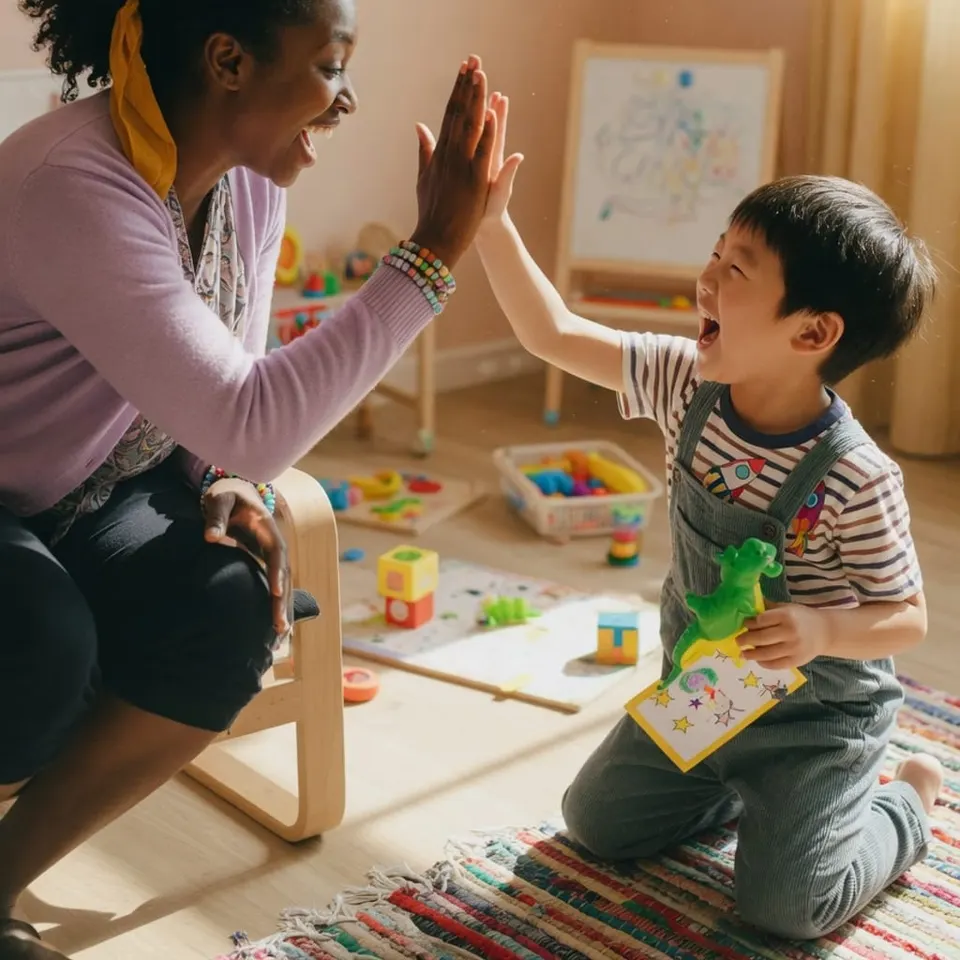
In short: Hand flapping is a repetitive motor behavior often seen in autistic individuals when they feel intense excitement or joy. It is a form of self-regulation and communication, not something to 'fix.' ABA therapy can help if flapping interferes with daily life, but many autistic people find it helpful.
Key takeaways
- Hand flapping is a common self-stimulatory behavior (stimming) in autism, often triggered by excitement.
- Stimming helps autistic individuals regulate sensory input and express emotions.
- Hand flapping is not harmful and does not need to be eliminated unless it causes injury or social difficulties.
- ABA therapy can teach alternative, safer stimming behaviors or help manage intense reactions.
What Is Hand Flapping in Autism?
Hand flapping is a repetitive motor behavior where a person rapidly moves their hands up and down or side to side. It is one of the most recognizable forms of stimming (self-stimulatory behavior) in autistic individuals. While hand flapping can occur in response to many emotions, it is especially common when an autistic person feels excited, happy, or overwhelmed with positive energy. For example, a child might flap their hands when opening a favorite gift, seeing a beloved pet, or watching a thrilling part of a movie.
Stimming behaviors like hand flapping are not unique to autism-many neurotypical people also engage in subtle stimming, such as tapping a foot or twirling hair. However, autistic individuals tend to use stimming more frequently and with greater intensity because it helps them manage their sensory input and emotional state.

🔗 Related reading: How to Choose an In-Home ABA Provider in California · Find ABA Near Me
Why Do Autistic People Flap Their Hands When Excited?
Hand flapping serves several important purposes for autistic individuals:
- Sensory regulation: The repetitive motion provides proprioceptive and vestibular input that can organize an overwhelmed nervous system. When excitement surges, the body may need a physical outlet to process that energy.
- Emotional expression: Many autistic people have difficulty expressing intense emotions through facial expressions or words. Hand flapping becomes a clear, physical signal of joy or excitement.
- Self-calming: Paradoxically, flapping can both release excitement and help prevent it from escalating into a meltdown. It is a built-in coping strategy.
Research suggests that stimming behaviors release neurotransmitters like dopamine and serotonin, reinforcing the behavior as a natural stress-relief mechanism. For a child with autism, hand flapping is simply their brain's way of saying, 'I am feeling a lot right now.'
Is Hand Flapping Always a Sign of Autism?
Not necessarily. Many toddlers and young children-with or without autism-go through a phase of hand flapping when excited. However, if hand flapping persists past age 3 or 4, occurs frequently, and is accompanied by other signs of autism (such as delayed speech, difficulty with social interaction, or repetitive play), it may be a clue worth exploring. A developmental pediatrician or a Board Certified Behavior Analyst (BCBA) can conduct a formal evaluation.
Should Hand Flapping Be Stopped or Reduced?
This is a critical question for parents and caregivers. The short answer is: hand flapping itself is not harmful and does not need to be eliminated. In fact, suppressing stimming can cause distress, anxiety, and even more challenging behaviors. The autistic community widely advocates for respecting stimming as a valid form of communication and self-regulation.
However, there are situations where gentle guidance may be helpful:
- If hand flapping is so intense that it leads to physical injury (e.g., hitting the face or objects hard).
- If it interferes with learning or participating in everyday activities.
- If the child wants to reduce flapping because of social awkwardness or bullying.
In those cases, ABA therapy can teach alternative, more socially acceptable stimming behaviors (like squeezing a stress ball or tapping a quiet fidget) without taking away the child's coping mechanism entirely. The goal of modern, compassionate ABA is never to make the child appear 'less autistic' but to help them thrive in ways that matter to them.
🔗 Related reading: ABA Therapy Access in Rural vs. Urban Michigan · Find ABA Near Me
When to Seek Professional Support for Hand Flapping
You do not need to seek professional help simply because your child flaps their hands when excited. But if you notice any of the following, consider consulting a BCBA or developmental specialist:
- The flapping is accompanied by self-injurious behavior (e.g., biting, head-banging).
- Your child seems distressed or unable to self-regulate after the excitement passes.
- Flapping interferes with your child's ability to interact with peers or learn in a classroom setting.
- You are worried about a possible autism diagnosis and want a proper evaluation.
An ABA provider will conduct a functional behavior assessment (FBA) to understand the triggers and functions of the hand flapping. They will then develop a behavior intervention plan (BIP) that respects your child's needs while addressing any identified concerns. Many elementary schools, early intervention programs, and private clinics offer these services.
How ABA Therapy Can Help with Hand Flapping and Related Behaviors
Applied Behavior Analysis (ABA) is an evidence-based therapy for autism that uses principles of learning and behavior to build skills and reduce challenges. A BCBA-led ABA team can help in several ways:
1. Teaching Replacement Behaviors
If hand flapping is causing problems (like hitting others or breaking items), the BCBA can teach a safer stimming behavior that fulfills the same need. For example, the child might learn to flap their hands away from their body or use a preferred fidget toy instead.
2. Building Emotional Regulation Skills
ABA can help children recognize when they are getting overly excited and use strategies like deep breathing, requesting a break, or using a visual calm-down card. This reduces the intensity of the energy that triggers flapping.
3. Social Skills Training
For older children and teens who want to reduce flapping in social settings, ABA can practice alternative ways to show excitement that still feel authentic-such as a quiet 'happy dance' or a verbal exclamation.
4. Collaboration with Schools and Families
BCBAs often train parents, teachers, and caregivers to respond consistently and supportively. This ensures the child gets the same help across environments.
Importantly, ABA should never be coercive. Ethical providers seek the child's consent and focus on the child's quality of life. Look for providers who openly respect neurodiversity and do not aim to 'normalize' every stim.
Costs, Insurance, and How to Get Started
ABA therapy is widely covered by health insurance in the United States, thanks to state autism mandates and the Affordable Care Act. Coverage typically includes:
- Private insurance plans: Most employer-based and marketplace plans cover ABA for autism. Check your specific plan benefits.
- Medicaid: All state Medicaid programs are required to cover medically necessary ABA therapy for children under 21. Some states offer it through managed care or fee-for-service. You can contact your state's Medicaid office or visit the Early and Periodic Screening, Diagnostic and Treatment (EPSDT) program.
- Early Intervention (Part C): For children birth to 3 years old, each state has an Early Intervention program that may cover developmental therapies including ABA. Ask your local lead agency.
Despite coverage, finding a suitable provider who accepts your insurance and has openings can be challenging. That is where Get Started with ABA comes in. As a free matching service, we connect families with vetted, BCBA-led ABA providers in their area. You simply tell us your location, insurance, and preferences, and we do the legwork-saving you hours of phone calls and stress.
What to Expect When You Reach Out
You will first speak with a care coordinator who listens to your situation. They will ask about the behaviors you are seeing (like hand flapping), any diagnoses you have, and what goals you have for your child. Within a few days, you will receive a shortlist of providers who can provide an initial assessment. Many offer in-home, clinic-based, or school-based services. All protocols are supervised by a BCBA.
There is no cost to you for using the matching service. We are funded by the provider network and believe that every child should have access to quality ABA without financial barriers.
Practical Tips for Parents and Caregivers
While waiting for professional support or simply embracing your child's hand flapping, try these strategies:
- Observe and note: Keep a simple log of when flapping occurs-what triggered it, how long it lasted, and what your child did afterward. This is valuable for a BCBA.
- Validate the feeling: Say something like, 'I see you are so excited! It is okay to flap your hands.' This communicates acceptance and safety.
- Offer a break if needed: If excitement seems overwhelming, invite your child to a quiet space with a sensory toy or to look at a calm-down bottle.
- Model alternative stims: Show your child other ways to express excitement, like clapping softly, jumping, or using a 'happy wiggle.' Do not force it-just provide options.
- Educate others: Explain to relatives, teachers, and friends that hand flapping is a normal autistic behavior, not something to punish or ridicule.
Remember: hand flapping when excited is a natural, valid expression of joy. With the right support, your child can continue to stim in ways that feel good while also developing skills to navigate a world that may not always understand.